



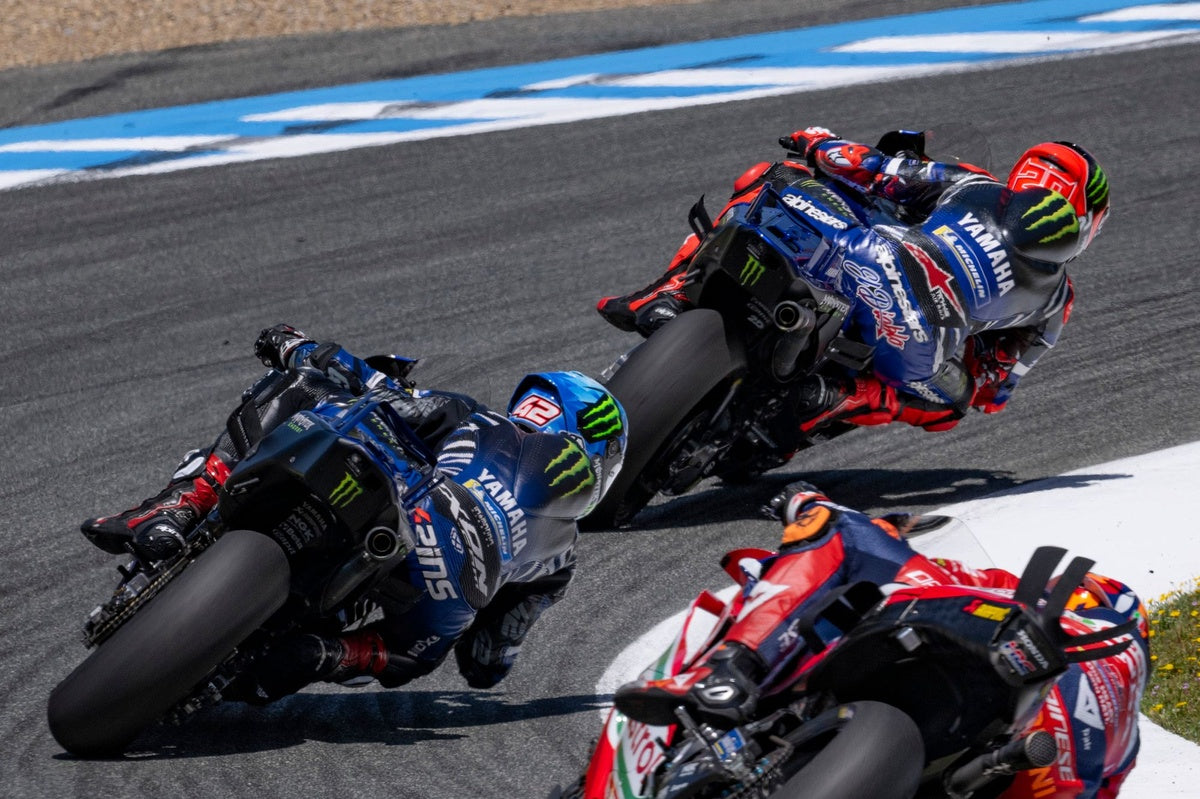
The best wildcard performances of the MotoGP era
A wildcard in MotoGP is a one-off entry. A rider who does not compete in the full championship and enters one or several specific races. It is usually a factory test rider, a national champion or a strategic name for the manufacturer. It does not count towards the team's championship, but does score for the rider's championship if they finish in the top fifteen.
The figure has existed since the beginning. Its weight has changed.
What is a wildcard in MotoGP and why it matters
There are three distinct entries that fans tend to mix and it is worth separating:
- Factory wildcard: the manufacturer adds a third (or fourth) official bike, normally piloted by its test rider. It serves to accumulate development kilometres under real race conditions.
- Private wildcard: an independent structure enters a one-off rider. Today it is practically non-existent in MotoGP due to cost and level requirements.
- Replacement by injury: this is not a wildcard. It is a substitution within the championship roster.
In the early years of the four-stroke era, with more rudimentary bikes and a less dense paddock, a competitive wildcard was plausible. Today it is not. The level of the top 15 is so compact that a rider entering sporadically with limited track time starts with a structural disadvantage.
That is why any decent result from a modern wildcard has significance.
Criteria to consider a wildcard "historic"
Finishing the race is not enough. For a performance to enter the conversation, three variables must be weighed:
- Position and time differential relative to the pace of the lead group. A fifteenth place one minute behind the leader is not news. A ninth place fifteen seconds back is.
- Machinery: it is not the same to ride a top factory bike as it is to ride a development version or a satellite with parts from the previous season.
- Sporting impact: did it cost or gain points for a title contender? Did it force the manufacturer to rethink something? Did it open the door to a signing?
With those filters, the list shrinks considerably.
The modern era and the test rider's role
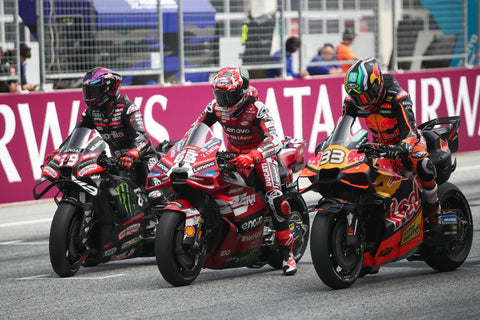
The contemporary wildcard is almost always the factory test rider. Stefan Bradl with Honda for years. Michele Pirro with Ducati. Dani Pedrosa in his occasional KTM returns. Lorenzo Savadori with Aprilia.
These are different profiles from the classic wildcard. They are not looking for results. They are looking for data.
The test rider enters a Grand Prix to validate in real race conditions what is tested on private circuits: new aerodynamics, a change in electronics, a specific rear compound, a revised chassis. The race is the most demanding test bench that exists. What holds on Sunday can be brought to development. What does not, goes back to the workshop.
Within that framework, the Pedrosa-KTM case has become the recent benchmark. His appearances as a wildcard with the RC16 showed competitive pace, not anecdotal, and reinforced the idea that a top-level test rider can deliver information that no private testing programme delivers.
It is not the same to roll alone in Jerez on a Tuesday as to measure yourself against the field with new tyres on the opening lap.
Why shining as a wildcard is increasingly difficult
There are structural reasons:
- Busier calendar: with more than twenty race weekends and sprint format included, the regular drivers accumulate kilometres and references that a wildcard does not have.
- Homologated electronics and single Michelin tyre: theoretical equality hides a trap. Extracting performance from the rear tyre throughout the race depends on hours of joint work between rider, team and telemetry. A test rider has part of that knowledge, not all of it.
- Gap between testing and racing: in private tests there is no grid, no battle for position, no real wear with traffic. The jump to Sunday is brutal.
- Compressed weekend setup: two free practice sessions before qualifying. The regular driver arrives with his baseline. The wildcard does not always.
The consequence is direct: a wildcard that finishes in the top ten with the category in good health, with no mass crashes or rain that levels things out, is already news.
Wildcards that changed the course of a weekend
Beyond final positions, the real weight of a wildcard is measured in what it causes within the championship.
A test rider who sneaks into Q2 forces the rival team to recalculate. A wildcard battling in the high-scoring group can steal a decisive tenth in qualifying or a point in the race from a title contender. In championships settled by small margins, that tenth counts.
The regulatory debate goes that way. Today a manufacturer can enter wildcards throughout the season with certain operational limits, and the usual practice is to spread the test rider's appearances across several Grands Prix to optimise development. The discussion about whether or not to further restrict that figure appears cyclically in the paddock, especially when a wildcard interferes in a title fight.
There is no consensus. Manufacturers defend it as a development tool. Customer teams view it with suspicion when the result affects them.
The human factor: the wildcard as a springboard
A wildcard has also historically been an audition. A rider who performs in a one-off entry puts himself in the spotlight. The factory watches, the satellite team watches, the manager watches.
In a season like the one being prepared, with open moves on grids like Trackhouse Aprilia following Ai Ogura's departure and public conversations about the role of riders like Joan Mir and Luca Marini in the official Honda team for the future, the wildcard figure regains relevance. A good one-off performance remains one of the few ways for a rider outside the championship to re-enter the hiring conversation.
It does not open the door on its own. But it leaves it slightly ajar.
How many wildcards can a manufacturer enter per race?
The regulations provide for a limited number of wildcard entries per season linked to the manufacturer and the event. The usual practice is one entry per manufacturer at each Grand Prix, with a maximum accumulated throughout the year. The exact figure is updated in the FIM Sports Regulations each season.
Can a wildcard rider score for the world championship?
Yes. If they finish in the top fifteen in the long race, they score the same points as a regular driver. The same applies to the sprint race on its corresponding points scale.
What is the difference between wildcard and concession entry?
They are not the same. Wildcard refers to the rider's status and one-off entry. Concessions are technical and testing advantages that the organisation grants to manufacturers with less competitive performance, and include, among other aspects, greater scope for private testing and mileage. A manufacturer with concessions can use more development wildcards, but they are different figures.
Can a wildcard rider qualify on the front row?
Yes, if they pass Q2 and post one of the three best times. It is exceptional, but not impossible when the wildcard is an elite test rider with the manufacturer's top bike and a circuit they know thoroughly.
The memorable wildcard
The memorable wildcard of the MotoGP era is not the one that wins. It is the one that delivers information that drives development, opens a debate in the paddock or reshapes a rider market. With current levels, that is the real measure.
The question remains in the air for the upcoming Grand Prix events: is there room, in a championship with two dozen races and a field compressed in less than a second, for a one-off entry to truly mark a weekend again?


Comments
Be the first to comment.