



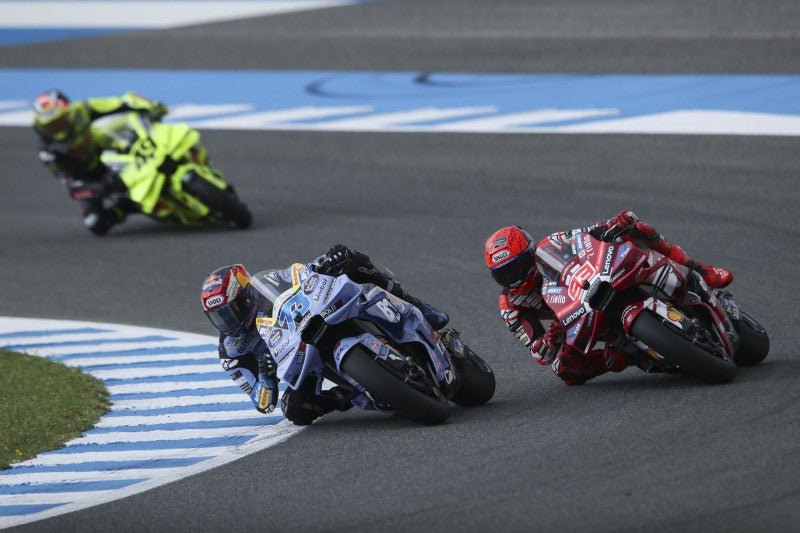
Satellite Ducati bikes are uncomfortable for the official ones: the puzzle nobody in the box can explain
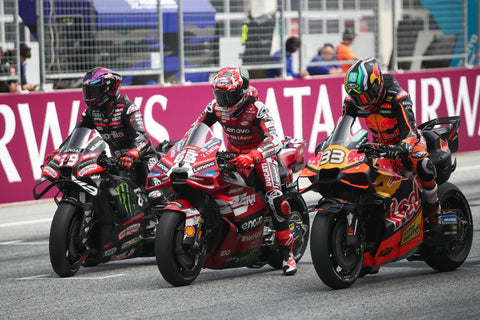
The satellite Ducati bikes are going as fast as the official ones. Sometimes, faster. And the riders themselves can't fully explain it.
It's the debate that has taken over the paddock in recent rounds: why bikes that on paper are second-tier material are matching the factory team. Alex Márquez, at Gresini, and Fabio Di Giannantonio, at VR46, have acknowledged it publicly. Neither has a solid explanation.
The anomaly: the satellite looks the factory in the eye
The classic distribution in MotoGP is well known. The factory team receives the latest specification, aerodynamic updates and chassis developments before anyone else. The satellite comes behind, with material from the previous year or parts that arrive in small quantities. That technical hierarchy usually translates into chronometric hierarchy.
With Ducati, that logic has been blurring for some time. And in recent races it has broken down completely: satellite riders fighting for podiums, setting fastest laps and looking directly at the Borgo Panigale bikes in race conditions.
It's not an isolated case in a single classification. It's a pattern that repeats race after race.
What the riders say: honest confusion
The issue came up when the protagonists themselves started discussing it in the press room. The common reading: it's hard to understand where the difference lies.
Márquez has pointed to the combination of rider, bike and track. Di Giannantonio has gone in a similar direction: there are days when the satellite bike fits better with his style and others when the factory marks distances. Neither speaks of having superior material. Neither speaks of having inferior material. They speak of a balance that doesn't quite add up with the theory.
It's an uncomfortable position for Ducati. The manufacturer that dominates the grid has its riders asking for internal explanations.
The technical hypotheses on the table
There's not a single answer. There are several layers, and it's worth separating them.
Chassis specification. Ducati has spent years supplying its satellite teams material very close to the official version. The difference, when it exists, usually lies in the latest chassis evolution or in specific aerodynamic pieces. The technical distance between the factory bike and the satellite is, today, narrower than at other manufacturers on the grid.
Electronics and engine maps. The control unit is unique for the entire category, but calibration is not. How traction control, power delivery or engine braking is managed depends on the team's work. And here there's room for a satellite with good engineers to extract performance from the same base.
Rider factor. Márquez and Di Giannantonio are in a sweet spot. Both have reached a competitive maturity that shows on the rubber and in race reading. The bike, while not superior, adapts to their style.
Setup and tyres. The preference for configurations and tyre management at the end of a race are territory where satellite teams, with less institutional pressure, sometimes dare to try setups that the factory doesn't test.
The internal dilemma: managing your own success
Ducati has a pleasant problem. One any manufacturer would sign up for: winning races regardless of which box wins them. But underneath there's real tension.
The weight of VR46 within the Ducati ecosystem is not just sporting. Valentino Rossi's structure has a political influence in the Italian paddock that no satellite had accumulated before. If a VR46 or Gresini rider finishes the season ahead of the officials, the conversation about who deserves what material next year gets complicated.
Ducati Corse's official policy insists on technical equality between its teams. The track, for now, backs that up. And that's exactly what opens the debate about internal hierarchy.
Precedents: it happened before
It's not the first time a satellite has made a factory uncomfortable. Casey Stoner won the 2007 championship with Ducati when the program was in a different phase. Valentino Rossi fought championships with Yamaha in structures where the satellite was nominally a shadow. Andrea Dovizioso lived through stages within Ducati where internal hierarchies didn't hold up against the stopwatch.
The difference with the current moment: what's happening with Ducati in 2025 is not a one-off anomaly from a weekend. It's a sustained pattern throughout the season.
And that's what forces you to look at it through a different lens.
Do the satellite Ducati bikes have the same bike as the factory ones?
Not exactly. The base is the same Desmosedici GP, but the latest chassis evolution, certain aerodynamic pieces and some updates reach the official team first. The technical distance, in any case, is smaller than at other manufacturers on the grid.
Why can a satellite team go faster?
Because the bike is only part of the equation. Electronic calibration, setups, tyre management and, above all, the fit between rider and bike can tip the scales. A satellite with good engineers and a rider in form competes on equal terms.
How does this affect the championship fight?
It affects the internal narrative of the manufacturer. If a satellite rider fights for important points, the management of strategic favours on track (pace, positions, teams) becomes a delicate matter within Ducati Corse.
Can Ducati step in to rebalance performance?
Publicly, no. The brand defends the equality of material between its teams. Internally, the calendar of updates and priority in new parts are tools that have always existed. How far the use of those tools goes, that's another conversation.
The open question
The season still has races ahead. If the pattern holds, Ducati will have to decide whether its model of four competitive bikes is a strength or an internal headache. If it breaks, we'll return to the classic hierarchy and all this will be a footnote.
The only thing certain today: even the riders themselves don't know for sure where the difference lies. And in a championship where everything is measured in tenths, that's the most revealing confession.
---


Comments
Be the first to comment.